


In today’s digital world, children are growing up surrounded by smartphones, tablets, smart TVs, and an endless stream of short-form videos. Whether it’s Instagram Reels, YouTube Shorts, or other social media platforms, children can spend hours scrolling through quick, engaging content without realizing how much time has passed. While technology has made learning more accessible than ever, it has also introduced new challenges for parents trying to nurture children’s reading habits.
Many parents now find themselves asking an important question: How can I help my child choose books over endless scrolling? This question is at the heart of modern digital parenting. Building a strong reading culture at home is no longer just about buying books; it is about creating an environment where children see reading as enjoyable, meaningful, and rewarding.
Why Raising Readers Matters Today
The world has changed dramatically over the past decade. Children are exposed to more digital content than any previous generation. Short videos provide instant entertainment, quick information, and constant stimulation. While these platforms can sometimes be educational, excessive screen time for kids often replaces activities that require deeper concentration, such as reading books, storytelling, creative play, and meaningful family conversations.
This is why raising readers has become more important than ever. Reading helps children slow down, think critically, imagine new worlds, and develop skills that last a lifetime. Unlike scrolling through videos, reading encourages children to engage actively with ideas, characters, and emotions. Every book strengthens their imagination, language skills, and confidence.
Parents who focus on building reading habits are giving their children a lifelong advantage. Reading regularly improves vocabulary, comprehension, creativity, and problem-solving abilities while also supporting emotional intelligence.
The Rise of Reels and Short-Form Content
Over the last few years, short-form video platforms have completely transformed how children consume information. Instead of watching a 30-minute educational program or reading a chapter from a book, many children now spend the same amount of time watching hundreds of videos, each lasting only a few seconds.
This constant stream of new content keeps the brain seeking instant rewards. Every swipe offers another surprise, another joke, another trend, or another exciting clip. While entertaining, this habit can make it difficult for children to enjoy activities that require patience and focus.
The discussion around children and screen time is therefore not about eliminating technology. Instead, it is about helping children develop a healthy balance between digital entertainment and meaningful learning experiences. One of the best ways to achieve that balance is by encouraging daily reading.
Reading vs Screen Time: Understanding the Difference
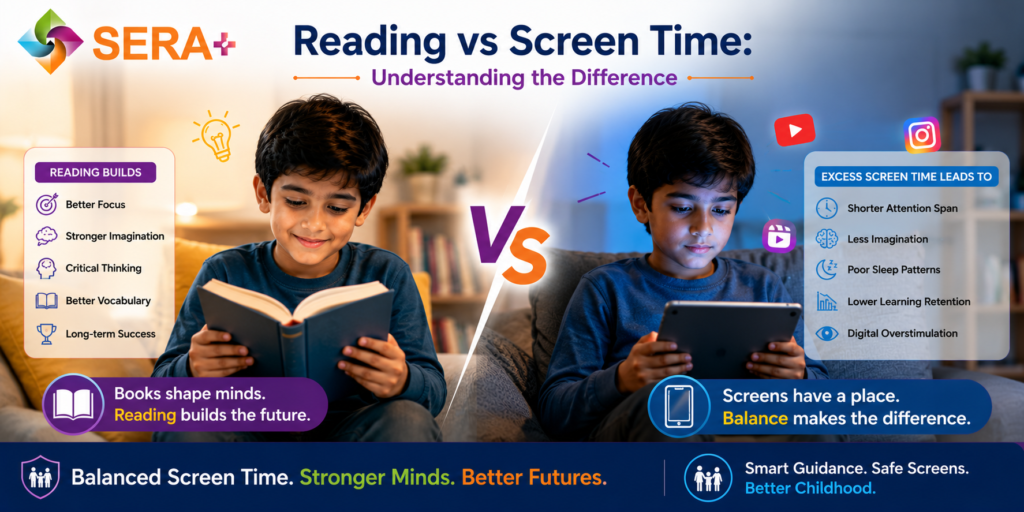
The debate around reading vs screen time is often misunderstood. Screens are not the enemy. Educational videos, digital libraries, and interactive learning platforms can all support children’s education. However, passive consumption of endless short videos does not provide the same cognitive benefits as reading.
Books encourage children to visualize characters, imagine settings, predict outcomes, and think deeply about stories. Reading strengthens concentration because children must remain engaged with a single narrative for an extended period. This sustained focus plays a significant role in children’s literacy development and academic success.
Research has consistently shown that children who develop strong reading habits perform better in language, communication, and critical thinking. These benefits extend well beyond the classroom and help children become confident learners throughout life.
How Reels Affect Children’s Attention Span
One of the biggest concerns among educators and parents is how reels affect children’s attention span. Short videos are designed to capture attention instantly. Bright visuals, music, and rapid scene changes continuously stimulate the brain, making it easy to keep scrolling.
Reading works differently. A book unfolds gradually. Characters develop over chapters, stories build slowly, and children learn to enjoy delayed rewards. This process trains the brain to focus, analyze, and reflect.
When children spend most of their leisure time consuming quick digital content, they may initially find reading challenging. This does not mean they dislike books. It simply means they need time and encouragement to rebuild their ability to concentrate. With consistent support from parents, children can rediscover the joy of reading.
The Benefits of Reading for Children
The benefits of reading for children extend far beyond academic achievement. Reading supports every aspect of a child’s growth and development.
Some of the most important benefits include:
- Improved vocabulary and communication skills.
- Better concentration and memory.
- Stronger imagination and creativity.
- Enhanced empathy through understanding different perspectives.
- Improved writing and comprehension skills.
- Increased confidence in school and daily life.
- Better emotional regulation and problem-solving abilities.
Books also expose children to cultures, ideas, and experiences beyond their everyday lives. Whether they are reading about space exploration, historical adventures, or fictional heroes, books encourage curiosity and lifelong learning.
Why Parents Play the Biggest Role
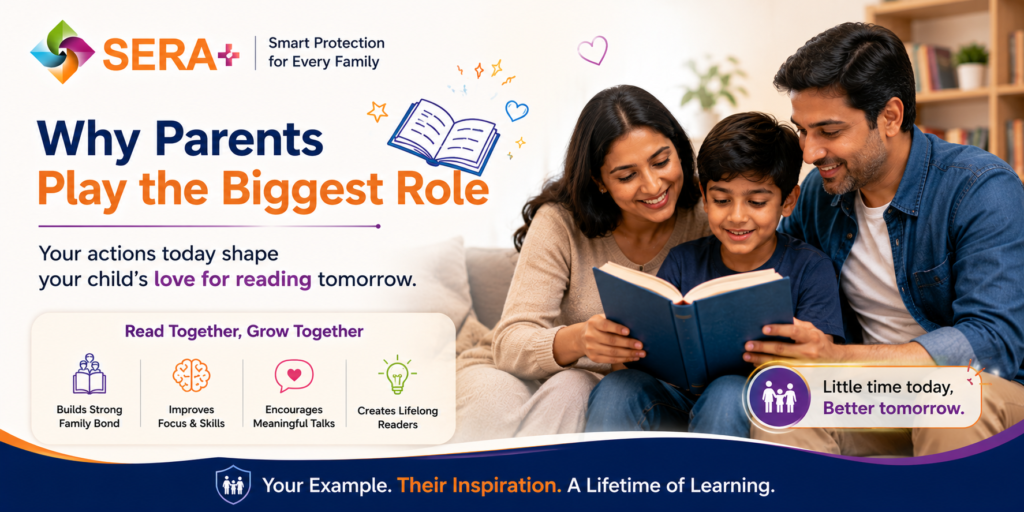
Schools can teach children to read, but families help them develop a genuine love of reading. Parents influence their children’s habits through everyday actions. When children see adults reading books, newspapers, or magazines, they begin to view reading as a normal and enjoyable part of life.
Creating a daily family reading time does not require expensive resources. Even fifteen to twenty minutes of reading together each evening can strengthen family bonds while improving literacy skills.
Parents can also encourage discussions about stories by asking simple questions:
- What was your favorite part?
- Which character did you like the most?
- What would you have done differently?
- What do you think happens next?
These conversations make reading interactive and enjoyable while helping children think critically about what they read.
Creating a Reading-Friendly Home
Building a reading-friendly home does not mean filling every room with bookshelves. Small, consistent changes often make the biggest difference.
Create a cozy reading corner with comfortable seating and good lighting. Keep age-appropriate books for children within easy reach. Visit libraries regularly, exchange books with friends, and celebrate reading milestones together.
Most importantly, establish simple routines that support healthy screen habits. Designate screen-free times during meals, before bedtime, or during family reading sessions. These routines help children understand that books are not a punishment for using screens—they are another enjoyable way to explore the world.
As children begin spending more time with books and less time endlessly scrolling, they gradually develop stronger focus, greater curiosity, and a lasting appreciation for stories.
The journey of raising readers does not happen overnight, but every page a child reads is a step toward becoming a more thoughtful, creative, and confident learner.
Practical Ways to Raise Readers in the Age of Reels
By now, it is clear that the challenge is not technology itself—it is helping children develop a healthy relationship with it. The good news is that parents do not have to choose between books and screens. With the right approach, children can enjoy technology while also developing strong reading habits for children.
The goal is not to eliminate digital devices but to create an environment where reading becomes an exciting part of everyday life. Here are practical strategies that families can use to inspire a lifelong love for reading.
1. Start with Your Child’s Interests
One of the biggest mistakes parents make is choosing books they think children should read instead of books children actually want to read.
If your child loves dinosaurs, football, space, superheroes, cooking, animals, or mysteries, begin there. When children connect with a topic they enjoy, reading feels less like homework and more like an adventure.
Choosing books based on personal interests is one of the best ways to build reading habits in children because motivation comes naturally.
2. Create a Daily Reading Routine
Consistency is more important than duration.
Even 15–20 minutes of reading every day can make a significant difference. Establish a reading routine for kids by setting aside a fixed time each day, such as after school or before bedtime.
A predictable routine helps children associate reading with comfort, relaxation, and family time rather than with academic pressure.
3. Make Family Reading Time a Tradition
Children learn by watching adults. If parents spend every evening scrolling on their phones, children are likely to do the same.
Instead, introduce family reading time where everyone reads together—even if each person is reading a different book. This simple habit sends a powerful message that reading is valuable at every age.
Shared reading sessions also strengthen communication, encourage discussion, and support digital wellness for families.
4. Build a Reading-Friendly Home
You do not need a large library to encourage reading.
A small bookshelf, a cozy corner with cushions, and easy access to books for children can transform the home into a reading-friendly home.
Rotate books regularly, visit your local library, and allow children to organize their own reading space. When books are visible and accessible, children are more likely to pick them up.
5. Balance Technology Instead of Banning It
One of the most common questions parents ask is how to reduce screen time and encourage reading.
The answer is balance—not punishment.
Instead of saying, “No more screens,” try creating clear family routines:
- Read for 20 minutes before using entertainment apps.
- Keep devices away during meals.
- Avoid screens at least one hour before bedtime.
- Schedule daily screen-free activities such as puzzles, drawing, storytelling, or outdoor play.
These habits encourage healthier choices without making books feel like a consequence.
6. Read Aloud Together
Reading aloud is one of the most effective ways to develop reading skills for kids, regardless of age.
When parents read with expression, change their voices for different characters, and pause to ask questions, stories become interactive experiences.
Ask questions like:
- What do you think happens next?
- Why did the character make that decision?
- Which part was your favorite?
These conversations improve comprehension, vocabulary, and critical thinking while making reading enjoyable.
7. Celebrate Progress, Not Perfection
Avoid pressuring children to finish difficult books quickly.
Celebrate small milestones instead:
- Completing a chapter
- Reading every day for a week
- Trying a new genre
- Visiting the library regularly
Positive reinforcement helps children associate reading with achievement and confidence.
8. Let Children Choose Their Books
Giving children the freedom to select books encourages independence.
Whether they choose graphic novels, biographies, fairy tales, science books, or comics, every positive reading experience contributes to children’s literacy development.
Remember, the goal is to create enthusiastic readers—not perfect readers.
9. Connect Stories to Everyday Life
Reading becomes more meaningful when children see its connection to real life.
After reading a story about gardening, plant seeds together.
After reading about space, watch the stars.
After reading about cooking, prepare a simple recipe as a family.
These experiences reinforce learning and help children remember what they read.
10. Replace Passive Scrolling with Creative Activities
Instead of automatically reaching for a phone during free time, encourage activities that stimulate imagination.
Examples include:
- Story writing
- Drawing favorite book characters
- Puppet shows
- Role-playing scenes from books
- Keeping a reading journal
These screen-free activities encourage creativity while strengthening comprehension and communication.
11. Help Reluctant Readers
Some children hesitate to read because they struggle with confidence or have not yet found books they enjoy.
If you are wondering about tips to encourage reluctant readers, remember these simple ideas:
- Start with shorter books.
- Allow children to reread favorite stories.
- Explore audiobooks alongside printed books.
- Read together instead of expecting independent reading immediately.
- Praise effort rather than speed.
Patience and encouragement often make a lasting difference.
12. Schools and Parents Must Work Together
Creating lifelong readers is easier when families and schools work as partners.
Teachers can recommend age-appropriate books, organize reading challenges, and celebrate literacy events. Parents can reinforce these efforts at home through regular reading routines.
This collaboration strengthens reading culture both inside and outside the classroom.
13. Understand the Importance of Reading Books
The importance of reading books extends beyond exams and grades.
Books teach empathy, resilience, curiosity, and problem-solving. They introduce children to diverse cultures, perspectives, and ideas while encouraging thoughtful reflection.
Unlike short videos that disappear in seconds, stories often stay with children for years, shaping how they think and understand the world.
14. Encourage Reading in the Digital Age
Reading in the digital age does not mean rejecting technology. It means using technology wisely.
Digital libraries, educational reading apps, and e-books can complement printed books when used thoughtfully.
Parents practicing digital parenting should focus on guiding children toward meaningful digital experiences rather than unlimited entertainment.
15. Creating Lifelong Readers in the Digital Age
Ultimately, creating lifelong readers in the digital age is about consistency, connection, and curiosity.
Children who grow up surrounded by books, meaningful conversations, and positive reading experiences are more likely to carry those habits into adulthood.
Every bedtime story, every family library visit, and every shared conversation about a book contributes to a child’s intellectual and emotional growth.
As parents, the greatest gift we can offer is not simply teaching children how to read—it is helping them discover why reading matters.