

The Hidden Price of Growing Up in a Digital World

Have you ever looked at your child sitting quietly with a smartphone and thought, Most parents have. A mobile phone often feels like a convenient companion for children. It keeps them entertained, helps them study, and allows them to stay connected with friends and family. In today’s fast-moving world, smartphones have become a part of everyday life, and there is no denying the benefits they offer. However, there is another side to this convenience that many families do not notice until it begins affecting their children. Every swipe, every click, every new app, and every extra hour spent staring at a screen leaves a mark on a child’s growing mind. These changes are not always visible immediately. Unlike a broken toy or a scraped knee, the effects of excessive screen exposure appear slowly. They show up in shorter attention spans, poor sleep, anxiety, reduced family conversations, declining academic performance, and sometimes even exposure to dangerous online content. Children today are growing up in a world where the internet is always available. They are learning, playing, and socializing online before they fully understand the risks that come with it. As parents, we cannot stop technology from becoming part of their lives, nor should we. Technology is an incredible tool when used wisely. The real challenge is helping children use it safely and responsibly. This is where Parental Control, Kid Monitoring, Screen Time Control, and Family Digital Safety become more important than ever. They are not about spying on children or taking away their freedom. Instead, they help parents guide their children through the digital world with confidence, just as they teach them to cross a busy road safely. The truth is simple. Every swipe has a cost. If parents do not pay attention today, children may end up paying the price tomorrow.
Children Are Growing Up Online Before They Grow Up in Real Life
Think about how childhood looked twenty years ago. Children spent evenings playing outside, riding bicycles, reading storybooks, and talking to friends face-to-face. Today, many children spend those same hours scrolling through videos, chatting with strangers online, playing games, or switching endlessly between social media apps. The internet has become their playground. While there are educational videos, learning apps, and creative platforms that encourage growth, there are also endless distractions waiting for them. Algorithms are designed to keep users engaged for as long as possible, and children are especially vulnerable because their brains are still developing. A child may begin watching one educational video, but within minutes, they are recommended dozens of unrelated videos designed to keep them watching. Hours pass without anyone realizing how much time has disappeared. This is why Screen Time Control is becoming an essential part of modern parenting. Setting healthy digital limits allows children to enjoy technology without becoming dependent on it. Healthy boundaries help children balance learning, entertainment, physical activity, sleep, and family time. Parents often worry about limiting screen time because they fear arguments or complaints. But children actually benefit from routines. When parents consistently manage screen habits, children develop healthier relationships with technology that continue into adulthood.
The Real Cost of Every Swipe
Many parents think the biggest danger of smartphones is addiction, but the reality is much broader. Every swipe exposes children to countless possibilities, both positive and negative. Some content encourages creativity, while other content promotes unrealistic lifestyles, violence, cyberbullying, harmful challenges, or misinformation. Children often cannot distinguish between trustworthy information and manipulative content. Even harmless-looking games collect personal information, display advertisements, and encourage children to spend money through in-app purchases. Social media platforms constantly compare children’s lives with carefully edited versions of other people’s lives, creating feelings of insecurity and low self-esteem. Research around the world continues to show that excessive screen use can contribute to poor sleep, anxiety, stress, lack of concentration, and emotional difficulties in children. This is why Internet Safety for Kids is no longer optional. It has become a basic responsibility for parents in the digital age. Parents cannot watch their child every second they spend online, but they can create safer digital environments with the right guidance and reliable Phone Monitoring for Kids solutions. Monitoring is not about invading privacy. It is about understanding online habits, identifying potential risks, and stepping in before problems become serious.
Why Modern Parenting Needs Digital Support
Parenting has always been challenging, but today’s parents face problems previous generations never experienced. Earlier, parents worried about their children’s physical whereabouts. Today, they must also worry about where their children are digitally. A child can be sitting safely in their bedroom while unknowingly talking to strangers, watching inappropriate videos, downloading harmful applications, or becoming a victim of cyberbullying. No parent can sit beside their child every hour of every day. That is why digital parenting tools have become valuable assistants rather than replacements for parenting. Solutions like SeraPlus help parents create healthier digital habits by combining Parental Control, GPS Tracker for Kids, Child Tracking, Screen Time Control, app management, and Family Safety features into one easy-to-use platform. Instead of constantly checking phones or arguing about screen time, parents can establish healthy routines that encourage trust, communication, and responsible technology use. Technology created many of today’s parenting challenges, but technology can also become part of the solution when used wisely.
Children Need Conversations More Than Restrictions

Many parents believe installing parental controls is enough to protect children. While digital tools are helpful, they cannot replace open conversations. Children need to understand why certain websites are unsafe, why sharing personal information online is risky, and why spending too much time on social media affects their mental health. When children understand the reasons behind family rules, they are more likely to follow them willingly.
Parents should regularly ask simple questions like:
1. What was the funniest thing you watched today?
2. Did anything online make you uncomfortable
3. Has anyone you don’t know ever messaged you?
These conversations create trust instead of fear. If children know they can talk openly without being punished immediately, they are much more likely to report online problems before they become dangerous. Combining honest communication with reliable Best Parental Control tools creates a stronger safety net than either approach alone.
The Silent Impact on Mental Health
One of the biggest hidden costs of excessive screen exposure is its effect on emotional well-being. Children constantly compare themselves with influencers, classmates, celebrities, and strangers online. Perfect photos, luxury lifestyles, edited appearances, and viral trends make ordinary life seem boring. Over time, children may begin believing they are not attractive enough, popular enough, or successful enough. The pressure to gain likes, comments, followers, and online approval can quietly affect confidence and self-worth. Many children never tell their parents how they feel because they believe everyone else is happier than they are. Healthy Family Digital Safety means protecting emotional health as much as physical safety. Parents who encourage outdoor activities, hobbies, reading, sports, family dinners, and device-free conversations help children develop confidence beyond social media. The goal is not to eliminate technology but to remind children that real life exists beyond the screen.
Knowing Where Your Child Is Brings Peace of Mind
Safety is about more than online activities. Parents also want to know their children’s physical location during school hours, tuition classes, sports practice, or outings with friends. Modern GPS Tracker for Kids solutions make this easier without constant phone calls. Features like Parental Control with Location Tracking allow parents to check whether children have safely reached school or arrived home on time. This reduces unnecessary anxiety while giving children greater independence. Instead of calling repeatedly, parents receive accurate updates and can focus on meaningful conversations rather than constant checking. Location sharing becomes especially valuable during emergencies, unexpected delays, or family travel. For working parents, these features provide reassurance throughout the day without interrupting children’s activities.
Building Healthy Digital Habits Starts at Home
Many parents believe that children will naturally learn how to use technology responsibly as they grow older. Unfortunately, that is rarely the case. Just as children learn good manners, healthy eating habits, and road safety from their parents, they also learn how to use digital devices by observing the adults around them. If a child sees parents constantly checking notifications during meals, scrolling before bedtime, or spending every free moment on their phones, they begin to think that this is normal. Children copy what they see much more than what they are told. Creating healthy digital habits starts with the entire family. It could be something as simple as keeping phones away during dinner, spending an hour every evening without screens, or choosing outdoor games instead of mobile games on weekends. These small changes help children understand that technology is a tool, not a way of life. At the same time, parents should not feel guilty for seeking help. Modern families are busier than ever. Work commitments, school schedules, tuition classes, and household responsibilities leave little time to monitor every online activity. This is where Parental Control solutions can support parents by helping them guide their children’s digital lives without constantly standing over their shoulders. Tools like SeraPlus allow families to create healthier routines through Screen Time Control, app management, safe browsing options, and Phone Monitoring for Kids. These features are not designed to replace conversations but to support them. They give parents the confidence to allow their children to explore technology while reducing unnecessary risks.
The Growing Risk of Cyberbullying
When parents think about bullying, they often imagine playgrounds, classrooms, or school buses. Today, bullying has found a new home on the internet. A child does not need to leave the house to become a victim. Hurtful comments, fake profiles, embarrassing photos, exclusion from online groups, and constant negative messages can all happen through a smartphone. Unlike traditional bullying, cyberbullying follows children everywhere. There is no safe place to escape when the device is always within reach. Many children suffer in silence because they are afraid their parents will simply take away their phones if they speak up. As a result, they hide their emotions while the problem continues to grow. Parents should regularly remind their children that they can talk openly about anything they experience online. Instead of reacting with anger or punishment, listening calmly helps children feel supported. Using Internet Safety for Kids practices such as monitoring suspicious activity, checking privacy settings, and discussing responsible online behavior can prevent many situations before they become serious. A combination of awareness, trust, and Kid Monitoring creates a much safer online environment for growing children.
The Importance of Balancing Online Learning and Entertainment
Technology has transformed education in many positive ways. Children can attend online classes, watch educational videos, solve practice questions, and explore subjects that were once difficult to access. The internet has opened doors to knowledge that previous generations could only imagine. However, learning and entertainment often exist on the same device. A child may open a tablet to complete homework but soon gets distracted by gaming notifications, social media updates, or endless video recommendations. What begins as thirty minutes of studying can quickly turn into hours of entertainment. This is one of the biggest reasons parents struggle to manage digital devices. Healthy Screen Time Control does not mean banning educational technology. Instead, it means helping children separate learning time from entertainment time. Parents can encourage children to finish assignments first and enjoy games or videos later within reasonable limits. Creating a structured routine teaches children discipline, responsibility, and time management—skills that benefit them far beyond the digital world.
Why Knowing Your Child’s Location Matters
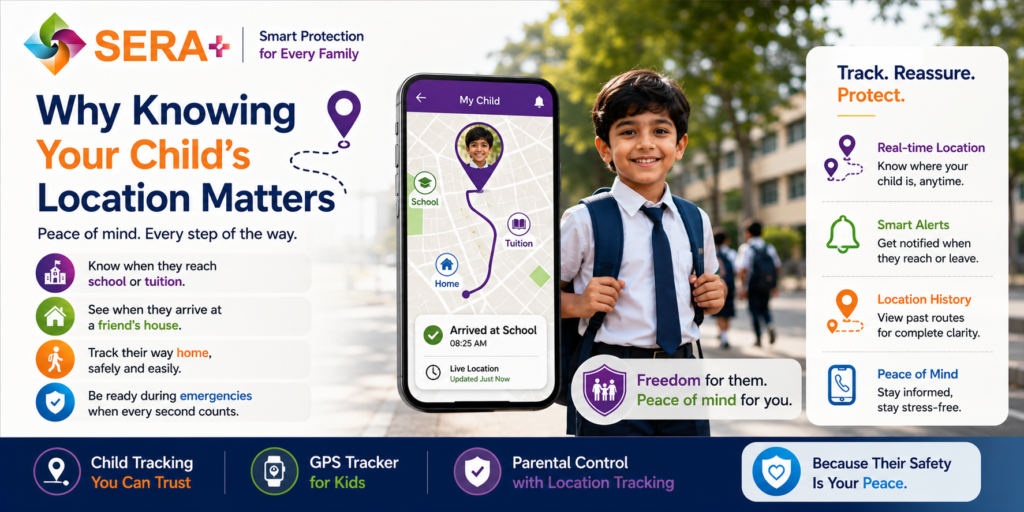
Every parent has experienced that moment of worry when a child is running late from school, tuition, or sports practice. Even a few extra minutes can feel much longer when there is no communication. This is where Child Tracking, supported by a reliable GPS Tracker for Kids, offers reassurance rather than control.
Knowing that your child has safely reached school, arrived at a friend’s house, or is on the way home reduces unnecessary anxiety. Instead of making repeated phone calls, parents can simply check their child’s location when needed. This type of Parental Control with Location Tracking is especially valuable for working parents who cannot always be physically present. It allows children to enjoy growing independence while giving parents peace of mind. More importantly, location features become incredibly useful during emergencies, unexpected travel changes, or situations where immediate assistance may be required.
Trust and Technology Can Work Together
One common misunderstanding about Phone Monitoring for Kids is that it damages trust between parents and children. In reality, trust grows when expectations are explained honestly. Parents should tell their children why certain rules exist. Instead of secretly installing monitoring tools, they can explain that these features are meant to keep everyone safe, just like wearing a helmet while riding a bicycle or fastening a seatbelt in a car. When children understand that monitoring is based on love rather than suspicion, they are more likely to cooperate. Trust also means gradually giving children more digital freedom as they demonstrate responsibility. Younger children may require stronger supervision, while teenagers can earn greater independence by showing good judgment online. The goal of Family Safety is not to control every action but to prepare children to make wise decisions even when parents are not around.
The Digital Footprint Children Don’t Understand
Children often believe that deleting a photo or message removes it forever. Unfortunately, the internet rarely works that way. Every post, comment, shared image, downloaded application, or account registration contributes to a child’s digital footprint. Something shared carelessly today may remain accessible for years. As children grow older, colleges, employers, and organisations increasingly consider online behaviour as part of a person’s reputation. This makes teaching responsible digital citizenship more important than ever. Parents should encourage children to think before posting anything online. A simple question can help: Would you be comfortable if your teacher, grandparents, or future employer saw this? Helping children understand privacy settings, secure passwords, and respectful online communication is just as important as teaching them mathematics or science. With Internet Safety for Kids, families can build habits that protect not only children today but also their future opportunities.
Technology Should Bring Families Together, Not Pull Them Apart
Ironically, devices designed to keep people connected often create distance within families. It is becoming common to see everyone sitting in the same room while looking at different screens. Parents answer work emails. Teenagers scroll through social media. Younger children watch cartoons. Conversations become shorter, eye contact disappears, and meaningful family moments slowly fade away. The solution is not removing technology completely. Instead, families should create moments where devices take a break. Family dinners without phones, evening walks, board games, weekend outings, reading together, or simply talking about the day can strengthen emotional bonds that no app can replace. Children who feel emotionally connected to their families are often better equipped to handle peer pressure, online risks, and digital distractions. Emotional security becomes their strongest protection. When parents combine quality family time with Best Parental Control practices and healthy digital boundaries, children learn that screens are only one part of life, not the center of it.
The Future Our Children Deserve
Every generation faces its own parenting challenges. Our parents worried about us playing outside until sunset. Today’s parents worry about children staying online long after bedtime. The world has changed, but one thing has remained the same—every parent wants their child to grow up happy, healthy, and safe. Technology is not the enemy. In fact, it has made learning easier, communication faster, and opportunities greater than ever before. Children can learn a new language, attend online classes, connect with family members living far away, and discover creative talents with just a few taps on a screen. The problem begins when technology starts controlling children instead of children learning how to control technology. A child who spends every free moment on a phone slowly misses experiences that shape personality and confidence. They miss conversations around the dinner table, games with friends in the park, family vacations without constant scrolling, and the joy of discovering hobbies beyond a screen. These moments may seem small today, but they become the memories that build a meaningful childhood. As parents, our responsibility is not to stop children from using technology. Our responsibility is to teach them balance. Just as we teach them to eat healthy food instead of only sweets, we also need to teach them to consume healthy digital content instead of endless entertainment.
Small Actions Today Create Big Changes Tomorrow
Many parents believe they need to make dramatic changes overnight. They think they must suddenly ban phones, delete every social media app, or completely stop screen time. In reality, lasting habits are built through small, consistent steps. It might begin with setting a fixed bedtime for devices. It could mean keeping phones out of bedrooms at night, creating a no-screen rule during meals, or spending one evening each week doing something together as a family. These simple routines help children understand that screens are only one part of life, not life itself. Children often resist new rules in the beginning. That is natural. However, when parents stay consistent and explain the reason behind each decision, children gradually adapt. They begin sleeping better, paying more attention in school, participating in conversations, and finding enjoyment in activities beyond the digital world. Healthy habits formed during childhood often stay with people throughout adulthood. That is why Screen Time Control, open communication, and positive role modelling matter so much.
Parents Don’t Need to Do It Alone
Modern parenting comes with responsibilities that previous generations never had to think about. Parents today must understand apps, online games, social media trends, digital privacy, cyberbullying, fake profiles, and online scams all while managing careers, homes, and family responsibilities. No one can monitor every notification, every website, or every conversation manually. That is why using smart digital tools is not a sign of weakness; it is a practical way to support responsible parenting. Solutions like SeraPlus are designed to help families build safer digital habits without creating fear or conflict. With features such as Parental Control, Kid Monitoring, Child Tracking, GPS Tracker for Kids, Phone Monitoring for Kids, Screen Time Control, Internet Safety for Kids, and Parental Control with Location Tracking, parents can stay informed while giving children the freedom to learn and grow responsibly. Instead of constantly worrying about where children are or what they might be doing online, parents can focus on what matters most: building trust, encouraging healthy conversations, and spending quality time together. Technology should support parenting, not replace it. The strongest protection any child can have is a caring parent who stays involved in both their offline and online lives.
Creating a Safer Digital Childhood
Children are naturally curious. They want to explore, ask questions, make friends, and discover new things. The internet gives them endless opportunities to do exactly that. But curiosity without guidance can sometimes lead them into situations they are not ready to handle. That is why digital safety should become part of everyday parenting, just like teaching children to lock the front door, wear a seatbelt, or look both ways before crossing the road. Parents should encourage children to think critically about what they watch, who they talk to, and what they share online. They should explain that not everyone on the internet is who they claim to be and that personal information should always be protected. Creating a safe digital environment is not about creating fear. It is about helping children become confident, responsible, and respectful digital citizens. When families combine clear rules, regular conversations, healthy routines, and reliable Family Digital Safety practices, children develop the skills they need to navigate technology wisely for years to come.
Every Swipe Shapes Tomorrow
A swipe may last only a second, but its impact can last much longer. Every video watched, every game played, every message sent, and every app downloaded slowly shapes a child’s habits, attention, emotions, and understanding of the world. These small daily choices eventually become lifelong patterns. As parents, we cannot be present for every click or every scroll. But we can create an environment where children learn to make good decisions, even when no one is watching. The goal is not to raise children who fear technology. The goal is to raise children who know how to use technology with confidence, responsibility, and balance. Because childhood passes quickly. The conversations we have today, the boundaries we set today, and the examples we show today will influence the adults our children become tomorrow. Every swipe has a cost. When parents choose guidance over neglect, conversations over silence, and prevention over regret, children don’t have to pay that price. Instead, they grow into confident, kind, responsible, and digitally aware individuals who know that technology is a powerful tool but it should never become the one that controls their lives. The greatest gift we can give our children is not the latest smartphone or tablet. It is the wisdom to use those devices safely, responsibly, and with balance. That is the foundation of a truly secure and happy future.