

The Ultimate Guide for Parents in the Digital Age
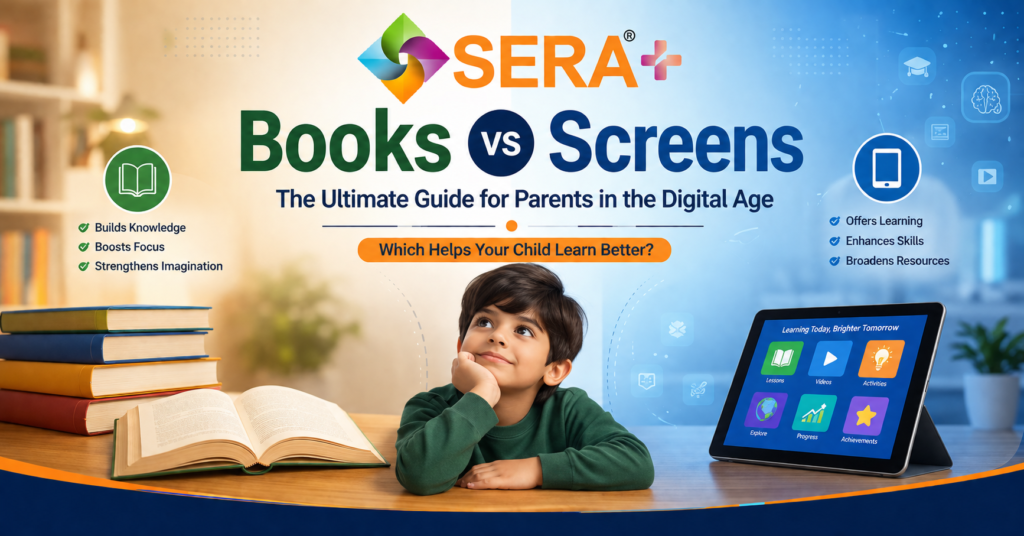
In today’s fast-changing world, one question worries many parents, teachers, and education experts: Books vs Screens: Which Helps Your Child Learn Better? Children are growing up surrounded by smartphones, tablets, computers, smart TVs, and digital learning platforms. At the same time, traditional books continue to be considered one of the most effective tools for learning and personal development. Many parents find themselves caught between encouraging traditional reading habits and embracing modern educational technology. On one hand, digital devices provide instant access to information, interactive learning experiences, and educational resources from around the world. On the other hand, books have been helping children develop knowledge, imagination, concentration, and critical thinking for centuries. The truth is that both books and screens have an important role in a child’s education. However, they influence learning, memory, attention, creativity, emotional intelligence, and academic performance in very different ways. Understanding these differences can help parents make informed decisions and create healthy learning habits for their children. This article explores the benefits and challenges of both approaches while helping families find the right balance between learning through books and learning through screens.
The Digital Transformation of Children’s Education
Education today looks very different from what it did just a few decades ago. Traditional classrooms filled with blackboards, textbooks, notebooks, and printed materials have gradually evolved into technology-rich learning environments. Children now attend online classes, complete digital assignments, watch educational videos, use learning apps, and participate in virtual discussions. Technology has made education more accessible than ever before. Students living in remote areas can now access the same learning opportunities as students in major cities. The COVID-19 pandemic accelerated this transformation. During lockdowns, millions of students relied completely on digital devices for learning. Online education became the primary method of teaching, and screen time increased dramatically across all age groups. While this shift ensured continuity in education, it also raised concerns about screen time for children, digital addiction, and the declining interest in reading books. Many parents noticed that their children were spending more time watching videos and less time reading stories or educational books. As technology continues to shape education, understanding the impact of both books and screens becomes increasingly important.
How Children Learn and Remember Information
Before comparing books and screens, it is important to understand how learning happens inside the brain. Learning is much more than simply reading words or watching videos. It involves attention, understanding, memory formation, problem-solving, and information recall. When children actively engage with information, they create stronger mental connections that improve long-term learning. One of the most important factors in successful learning is attention. Children learn best when they can focus on one activity without constant interruptions. Unfortunately, many digital platforms are designed to capture attention through notifications, advertisements, autoplay features, and endless scrolling. These distractions can make it difficult for children to maintain deep focus. Constant task-switching may reduce comprehension and memory retention over time. Books offer a completely different experience. When children sit down with a printed book, they enter a distraction-free environment. There are no pop-up messages, no alerts, and no competing sources of entertainment. This allows the brain to concentrate fully on the material being read. Because of this focused environment, many experts believe that books improve concentration in children more effectively than digital devices.
Why Reading Books Remains Essential for Child Development
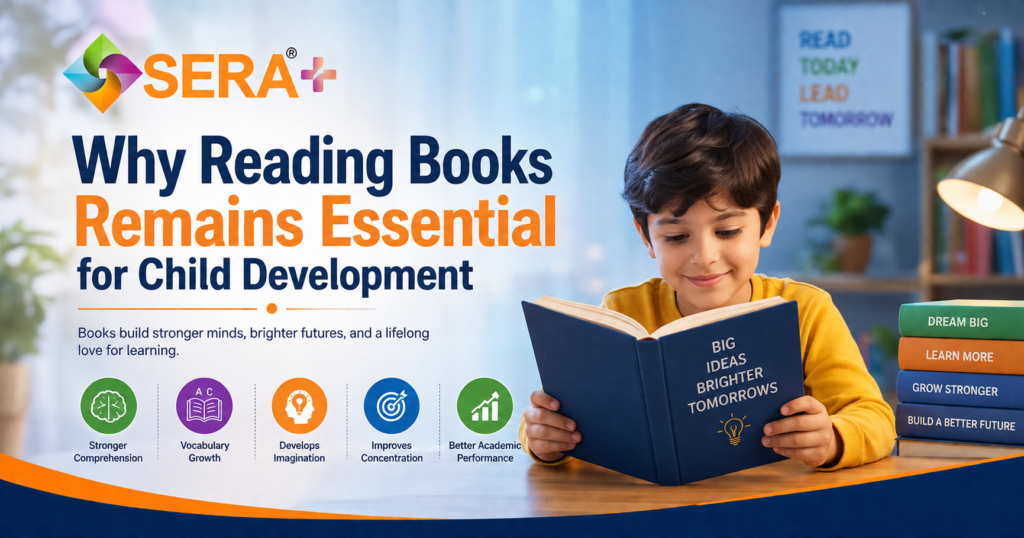
Despite advances in technology, reading books continues to be one of the most powerful learning activities for children. When children read books, they engage in a process called deep reading. Unlike scrolling through online content, reading requires careful attention, reflection, and imagination. Children think about the story, visualize characters, understand emotions, and connect ideas. This process strengthens multiple areas of brain development simultaneously. One major benefit of reading is improved comprehension. Children who regularly read books become better at understanding complex information. They learn to identify important details, analyze ideas, and make logical connections. Another advantage is vocabulary growth. Books expose children to a much wider range of words than they typically encounter in everyday conversations or social media content. A larger vocabulary helps children communicate more effectively, understand lessons more easily, and perform better academically. Research consistently shows that children with strong reading habits for kids often achieve higher grades and demonstrate stronger language skills than children who rarely read. Reading also develops patience and persistence. Unlike videos that provide instant stimulation, books require sustained attention. This helps children build self-discipline and concentration skills that benefit them throughout life.
How Books Strengthen Imagination and Creativity
One of the greatest advantages of books is their ability to stimulate imagination. When children read stories, they create mental images of characters, settings, and events. Every reader imagines a story differently, making reading a highly personal and creative experience. For example, when a book describes a magical forest, children must visualize the trees, colors, sounds, and creatures in their minds. This mental exercise strengthens creativity and imaginative thinking. Creativity is not limited to artistic activities. It also supports innovation, problem-solving, critical thinking, and adaptability. These skills are becoming increasingly important in today’s rapidly changing world. Children who develop strong imaginative abilities often become better at finding solutions, generating ideas, and thinking independently. This is one reason why experts continue to recommend reading as a key activity for healthy child development.
The Benefits of Digital Learning and Educational Technology
Although books offer numerous advantages, technology has also transformed education in positive ways. Modern educational technology provides learning opportunities that were impossible in previous generations. Children can explore interactive lessons, watch educational videos, participate in virtual experiments, and access information from anywhere in the world. Digital learning is particularly useful for visual learners. Some concepts are easier to understand when presented through animations, diagrams, simulations, and videos. For example, a child learning about the solar system can watch planets moving around the sun instead of simply reading a description. A science lesson can include virtual experiments that engagingly demonstrate complex concepts. Technology also supports personalized learning. Children can learn at their own pace, replay lessons, review difficult topics, and practice skills through interactive exercises. High-quality educational screentime can make learning enjoyable and increase student engagement when used appropriately. The key is ensuring that digital tools are used for meaningful educational purposes rather than passive entertainment.
Books vs Screens for Memory Retention
Memory plays a crucial role in learning. Children need to remember information so they can apply it in future situations. Studies have found that students often remember information better when reading printed books compared to reading the same content on digital screens. Printed books encourage slower reading and deeper processing. Children physically turn pages, notice where information appears, and spend more time reflecting on what they read. These physical interactions help create stronger memory connections. Digital devices sometimes encourage faster reading behaviours. Children may skim content, scroll quickly, or switch between multiple tabs before fully understanding the material. This does not mean digital learning is ineffective. Interactive quizzes, educational games, and revision activities can strengthen memory when designed properly. However, for subjects requiring deep understanding and long-term retention, books often provide significant advantages.
The Impact of Screens on Children’s Attention Span
One of the most discussed concerns today is the decline in children’s attention spans. Many digital platforms are designed to maximise engagement through constant stimulation. Bright visuals, sound effects, rewards, and endless content streams encourage children to keep interacting with screens. While this can make digital experiences entertaining, it may also train the brain to expect constant stimulation. As a result, slower activities such as reading textbooks, writing essays, or solving complex problems may feel less appealing. Books encourage sustained attention. Children learn to focus on a single task for extended periods without external stimulation. Strong concentration skills are essential for academic success, career development, and everyday problem-solving. For this reason, many educators recommend balancing digital learning with regular reading activities.
Language Development: Why Books Have a Powerful Advantage
Language skills form the foundation of learning. Children who read regularly are exposed to rich vocabulary, diverse sentence structures, and advanced language patterns. This exposure improves reading comprehension, writing ability, grammar, and communication skills. Books often contain more sophisticated language than online videos, social media posts, or everyday conversations. As children encounter new words repeatedly, they naturally expand their vocabulary and improve their ability to express ideas clearly. Strong language skills support success in all academic subjects because children can better understand instructions, analyse information, and communicate their understanding. Although educational videos can introduce new vocabulary, books generally provide a more effective environment for deep language development. This is why experts continue to emphasize the importance of the benefits of reading books for children in the digital age.
Books and Emotional Intelligence
Learning is not only about acquiring knowledge. It also involves emotional growth and social development. Stories help children understand emotions, relationships, challenges, and different perspectives. Through reading, children experience the feelings of characters and learn empathy. They witness acts of courage, kindness, honesty, resilience, and friendship. These experiences teach valuable life lessons and help children develop emotional intelligence. Children with strong emotional intelligence often build healthier relationships, communicate more effectively, and manage challenges more successfully. While technology can support collaboration and communication, books remain one of the most effective tools for teaching empathy and emotional understanding.
Conclusion: Finding the Perfect Balance Between Books and Screens
The debate about Books vs Screens for child development is not about choosing one and rejecting the other. Books develop concentration, imagination, vocabulary, emotional intelligence, memory, and critical thinking. Screens provide interactive learning experiences, visual explanations, flexibility, and access to global educational resources. The most effective approach combines the strengths of both. Parents should encourage daily reading habits while using technology as a valuable educational tool. Creating screen-free reading times, limiting recreational screen use, and selecting high-quality educational content can help children enjoy the benefits of both worlds. In the end, the goal is not to eliminate technology or replace books. The goal is to raise curious, confident, knowledgeable, and balanced learners who can succeed in both the digital world and the real world.